For Families & Carers
Your family member
deserves the right support
If you are exploring Supported Independent Living for a family member with complex needs, you probably have a lot of questions — and a lot at stake. This page is for you.
For Families & Carers
We understand what this decision means
Choosing a supported living arrangement for a family member is one of the most significant decisions a family will make. It is not just about finding a bed — it is about trusting another team of people with someone you love, someone whose needs are complex, and whose daily experience matters deeply to you.
At Nurse Aid Australia, we work with participants who have forensic backgrounds, acquired brain injury, dementia, high intensity clinical needs, intellectual disability, and autism. These are not straightforward placements — and we do not treat them as such.
When you contact us, you are likely to speak with Lisa Trimboli — our Intake and Business Development Officer. Lisa is a Registered Nurse who brings her own lived experience as a family carer to every conversation. She understands this from both sides.
Your Involvement
What your involvement looks like
Families are kept genuinely informed. There is a regular rhythm of communication so families know how their family member is going, and a named contact at NAA who knows the participant and can be reached when needed. When something significant happens, families are contacted promptly — NAA does not wait for the next scheduled update. Families are also part of how support plans are built. Family knowledge of the participant is treated as valuable input, and families have a real avenue to raise questions or concerns and have them addressed.
Daily Life
What daily life looks like at NAA
A SIL placement at Nurse Aid Australia is built around the participant — structured, safe, and genuinely supportive of independence.
Structure and routine
For participants with complex needs, consistent daily routines are part of the support model — not just a preference. Mornings are structured, meals are planned, and the environment is designed to support, not just house.
Community participation
Participants access their community with structured support — shopping, recreation, appointments, and social connection. For high-risk participants, community access includes appropriate risk management and staffing.
A real home
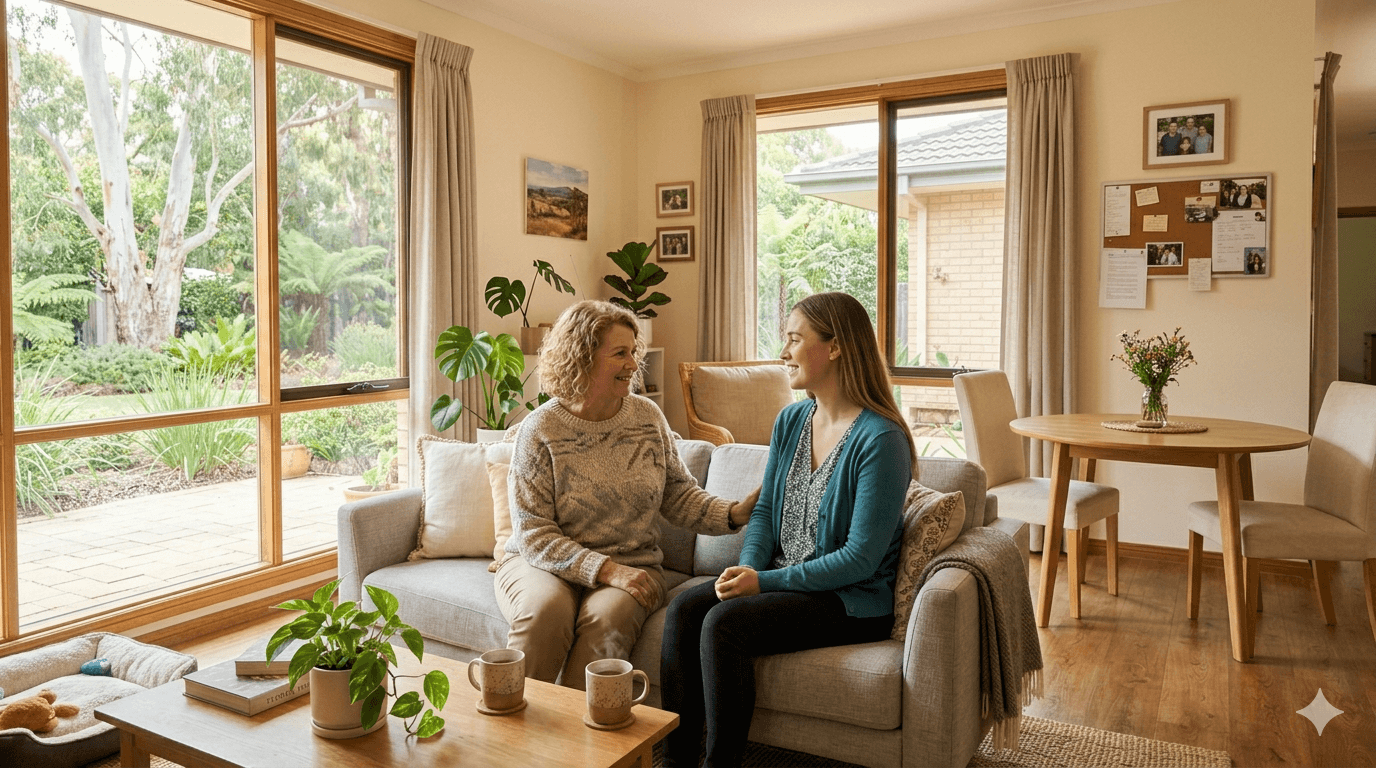
NAA properties are homes — not facilities. Participants have their own space, their own routines, and support workers who know them. The goal is genuine independence within a safe, supported environment.
Frequently Asked
Questions families ask us
Office hours: Monday to Friday, 9:00am – 5:00pm
Participant support runs 24/7.
Looking for a SIL placement for your family member?
Nurse Aid Australia has current vacancies across Adelaide for participants with complex support needs. View available properties and enquire directly.
View current SIL vacancies